“You also want to be continuing to iterate and modify and monitor after that release,” said Encode General Counsel Nathan Calvin.
The prospect of the government vetting AI models is causing a minor panic in certain tech policy and industry circles.
This week, the New York Times and POLITICO reported that the White House is considering an executive order that would, in part, require government testing and approval before AI companies can release their models.
Kevin Hassett then said during a Wednesday Fox Business appearance that the executive order may include “a clear roadmap to everybody about … how future AIs that also potentially create vulnerabilities should go through a process so that they’re released to the wild after they’ve been proven safe, just like an FDA drug.”
The news came as the administration met with tech companies about Mythos and other AI models that potentially pose a dire threat to cybersecurity. Such a proposal for the government to pre-approve model releases has received opposition from free-market think tanks and industry-aligned tech policy advisers, along with some academics.
Much of the debate speaks to a question that any policymaker faces when trying to regulate a potentially harmful product: Do you try to ensure something is safe before it’s released, or punish companies after the fact if something goes wrong?
When it comes to tech regulation, the U.S. has traditionally favored the latter approach of imposing penalties after a product causes harm in the wild.
“It gets to what is the heart and soul of America’s technological governance regime, which is that we have a regime for computing and digital communication that’s much more ex-post and responsive in character,” said Adam Thierer, a resident senior fellow at the R Street Institute.
There are plenty of reasons to think that going to the other extreme of requiring government pre-approval would be a bad idea for AI.
“Frankly, it would create a false sense of security,” said Neil Chilson, a former acting chief technologist at the Federal Trade Commission who is currently the Abundance Institute’s head of AI policy. “There’s only so much you can do in a lab environment … to actually study something that is a general-purpose technology, that is going to be deployed in lots of different spaces.”
Getting upfront government approval could be an issue if it leads people to be less vigilant about problems after release. “You also want to be continuing to iterate and modify and monitor after that release,” said Encode General Counsel Nathan Calvin.
Given the notoriously glacial pace of bureaucracy, waiting on the government to give the green light could slow innovation, but also make it harder for public watchdogs to conduct their own oversight.
“A lot of the most concerning risks from frontier models come from how they are used internally within the companies that develop them,” Helen Toner, interim executive director at the Georgetown Center for Security and Emerging Technology, told DFD. “Creating extra barriers to releasing them would do nothing to solve that problem, and would lengthen the time period when companies have advanced models internally that the public — and independent experts — have no access to.”
And if you consider models to have some elements of speech, then there could be constitutional issues with a pre-approval regime. The First Amendment forbids “prior restraint,” which involves requiring government authorization before something can be expressed. American laws around defamation or obscenity are designed to punish illicit speech after the fact. Prohibiting prior restraint is a core tenet of First Amendment law, born out of a history of censors attempting to control printing presses. Thierer suggests that having the government oversee model releases could run afoul of this principle.
“Information communication technologies have special First Amendment concerns … when you regulate them,” he said. “If you’re regulating a model to be ‘safe,’ that can be done along certain dimensions where you could probably try to avoid getting into speech concerns, but at some point you might.”
Yet if models like Mythos are as powerful as companies claim, then waiting for harm to occur could result in a catastrophe that’s hard to mitigate. Even so, Toner suggests that looping in regulators on an advisory level prior to release could be a preferable alternative to giving them veto power. “[I]t obviously would have been better for CISA to have early access to Mythos and be actively working to coordinate cyber defense among U.S. critical infrastructure providers,” she said.
This is more aligned with the approach of the Center for AI Standards and Innovation at the Commerce Department. The agency announced deals with Microsoft, xAI and Google DeepMind on Tuesday to conduct pre-deployment evaluations, though this is done on a voluntary basis. Chilson was supportive of the idea: “[Companies] don’t always have all of the context for what the government might know about our adversaries or what they might know about our own governmental systems.”
A White House official told DFD on background: “Any policy announcement will come directly from the President. Discussion about potential executive orders is speculation.”
About the Author
Nathan Calvin
Nathan Calvin is General Counsel at Encode, where he leads legal strategy, including Encode’s recent work scrutinizing OpenAI’s nonprofit restructuring. He holds a JD and Master’s in Public Policy from Stanford University, is a Johns Hopkins Emerging Leaders in Biosecurity Fellow, and previously worked at the Center for AI Safety Action Fund and the Senate Judiciary Committee.
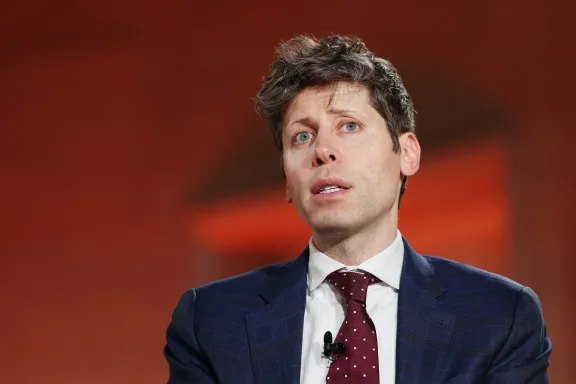
Fortune: Sam Altman says AI superintelligence is so big that we need a ‘New Deal’
“I hope this document signals a move toward more constructive engagement, instead of attacking politicians pushing the very policies OpenAI is now endorsing,” said Calvin,
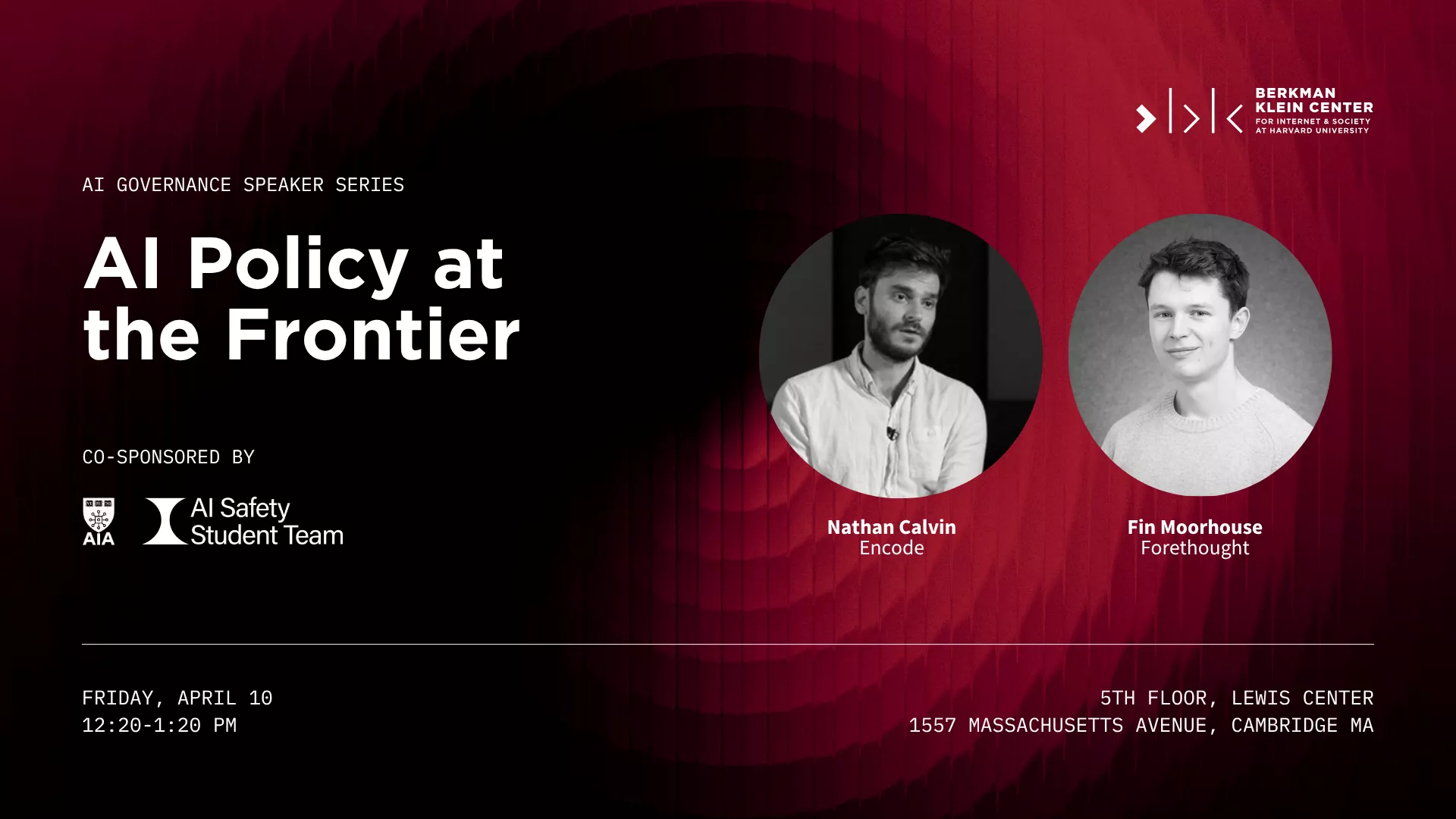
Harvard Berkman Klein Center: AI Policy at the Frontier, A Conversation with Nathan Calvin (Encode) and Fin Moorhouse (Forethought)
What does it take to govern a technology that might reshape the world within the decade? Answering that requires both big-picture thinking about where AI is heading and close engagement with the policy fights shaping it in the present. This event brings together two speakers who sit on opposite ends of that spectrum — one […]
Voters Warn Trahan: Don’t Let Big Tech Wipe Out AI Safeguards
“There is overwhelming support for stronger guardrails around the development and use of AI,” said Adam Billen, Co-Executive Director, Encode AI. “Massachusetts has been a national leader in addressing AI-related risks. Freezing those efforts now would roll back the hard-won protections Massachusetts lawmakers have established and leave the state’s children, families, and workers more vulnerable to harm from AI now and into the future. We urge Rep. Trahan to put the safety of her constituents ahead of corporate interests and oppose this preemption legislation.”