Politico: Silicon Valley’s anti-regulation super PACs lose their fear factor
Nathan Calvin
SHARE
Introduction
“[Leading the Future] went into this race as a genuinely frightening force,” said Calvin. “And they left the race not a particularly imposing force that politicians don’t seem particularly afraid of.”
When the billionaire-backed super PAC network Leading the Future launched last summer, it threatened to dump a deluge of negative ad dollars on candidates whose artificial intelligence policies “stifle innovation, enable China to gain global AI superiority, or make it harder to bring AI’s benefits into the world.”
And when the group pledged in November to stop New York Democratic Assemblymember Alex Bores from joining the House — payback, it said, for Bores’ work on a state AI safety bill — it promised to “aggressively oppose policymakers and candidates in states across the country who play political games with the future of American leadership” on AI.
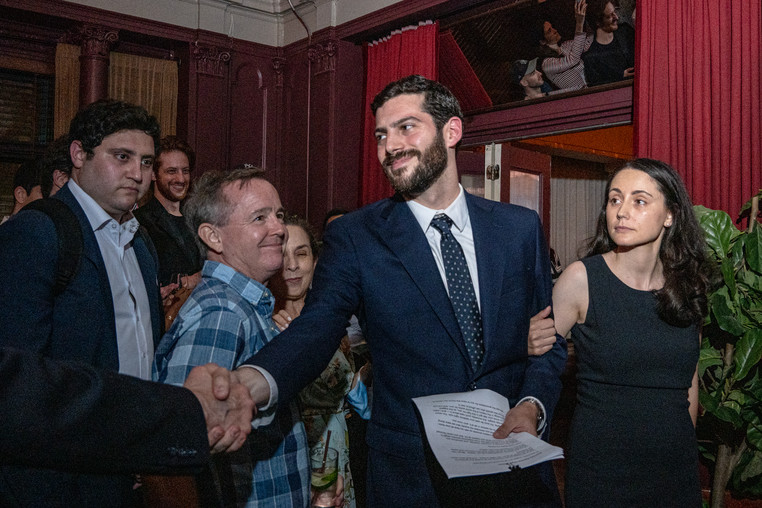
Leading the Future ultimately spent $8 million to sink Bores — a significant chunk of the more than $75 million it has raised from OpenAI President Greg Brockman, venture capitalist firm Andreessen Horowitz and others. And earlier this week, Bores narrowly lost his Manhattan primary race to Assemblymember Micah Lasher, a fellow tech industry critic and co-sponsor of Bores’ AI law.
But despite their prior bluster, spokespeople for Leading the Future were strangely silent on the win. And according to one person familiar with LTF’s strategy, granted anonymity to discuss internal deliberations, the industry group is unlikely to target another candidate with the kind of negative ad blitz it deployed against Bores.
Supporters of stricter regulations on the AI sector think they know why. They say Bores’ close second in a five-person race shows his critique of the tech industry still resonated with the public, which is increasingly wary of AI’s impact on jobs, electricity costs and public safety. Those concerns are even more pronounced in a Democratic primary — and to the extent that voters were aware of the AI industry’s anti-Bores push, pro-regulation voices say it may have made them more likely to back his candidacy.
AI safety advocates also pointed to the fierce financial backlash sparked by LTF’s decision to target Bores. In the end, the industry group’s $8 million money bomb was dwarfed by more than $18 million spent on pro-Bores ads by a competing set of super PACs that back tough AI rules. Roughly $12 million of that total came from Public First Action, a super PAC network with ties to the AI firm Anthropic.
Nathan Calvin, general counsel and vice president of state affairs at the pro-regulation group Encode AI, said the deluge of pro-regulation dollars in the Bores race undermined LTF’s plan to intimidate other lawmakers from taking on the industry.
“[Leading the Future] went into this race as a genuinely frightening force that seemed potentially positioned to fundamentally reshape the incentives of politicians in Congress and their willingness to touch AI,” said Calvin. “And they left the race not a particularly imposing force that politicians don’t seem particularly afraid of.”
Brad Carson, the co-lead of Public First and a former Democratic congressman from Oklahoma, called Bores’ loss “a tactical defeat” for his super PAC network — but a “strategic victory” for the broader AI safety lobby.
“What happened in the last six months was we showed the strength of the AI safety fundraising movement,” Carson said. He asserted that pressure from Public First-affiliated super PACs ultimately led to OpenAI distancing itself from Leading the Future over the last several weeks.
The broader politics of AI regulation also look very different compared to November, when LTF first targeted Bores for defeat.
OpenAI and Anthropic declined to comment on LTF. But Dean Ball — OpenAI’s incoming head of strategic futures and former top AI adviser in the Trump White House — suggested the group’s plan to make an example of Bores backfired.
“I don’t think it’s crazy to argue … that LTF should have put its weight behind Bores,” Ball wrote in an X post on Wednesday. He suggested that Lasher — who unlike Bores supports a data center moratorium — could prove even more harmful to the AI industry’s priorities.
“I do hope the AI-optimist side of this gets its act together,” Ball wrote.
Leading the Future’s response to the election results has been tepid, including a statement on election night that did not mention Bores’ name but highlighted the group’s support for “strong and smart guardrails” on AI. It did not comment on whether it sees the outcome in New York as a reflection of public opinion on the technology, or on whether it plans to intervene in other competitive races.
A win is a win, of course. And there are signs that LTF will continue to show up for their preferred politicians between now and November — on Thursday, the group announced it would spend $600,000 to support Jay Feely, a pro-AI industry candidate running in a competitive House Republican primary in Arizona.
Adam Kovacevich, founder and CEO of the tech industry group Chamber of Progress, said Carson and other advocates of AI regulation are trying to spin their way out of an embarrassing primary loss for Bores.
“You only need to spin when you don’t succeed,” Kovacevich said.
But Carson said he and Public First are eager for another expensive fight with Leading the Future — including in places like Colorado, where Democratic representative Manny Rutinel is running for Congress on a pro-AI regulation platform.
“We would welcome another fight like Bores, because we think it raised AI safety as a salient issue,” Carson said.
About the Author
Nathan Calvin
Nathan Calvin is General Counsel at Encode, where he leads legal strategy, including Encode’s recent work scrutinizing OpenAI’s nonprofit restructuring. He holds a JD and Master’s in Public Policy from Stanford University, is a Johns Hopkins Emerging Leaders in Biosecurity Fellow, and previously worked at the Center for AI Safety Action Fund and the Senate Judiciary Committee.
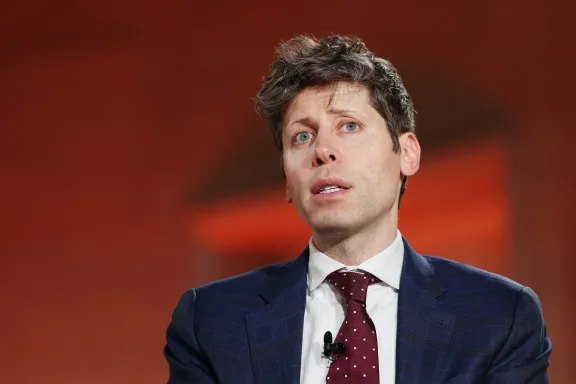
Fortune: Sam Altman says AI superintelligence is so big that we need a ‘New Deal’
“I hope this document signals a move toward more constructive engagement, instead of attacking politicians pushing the very policies OpenAI is now endorsing,” said Calvin,
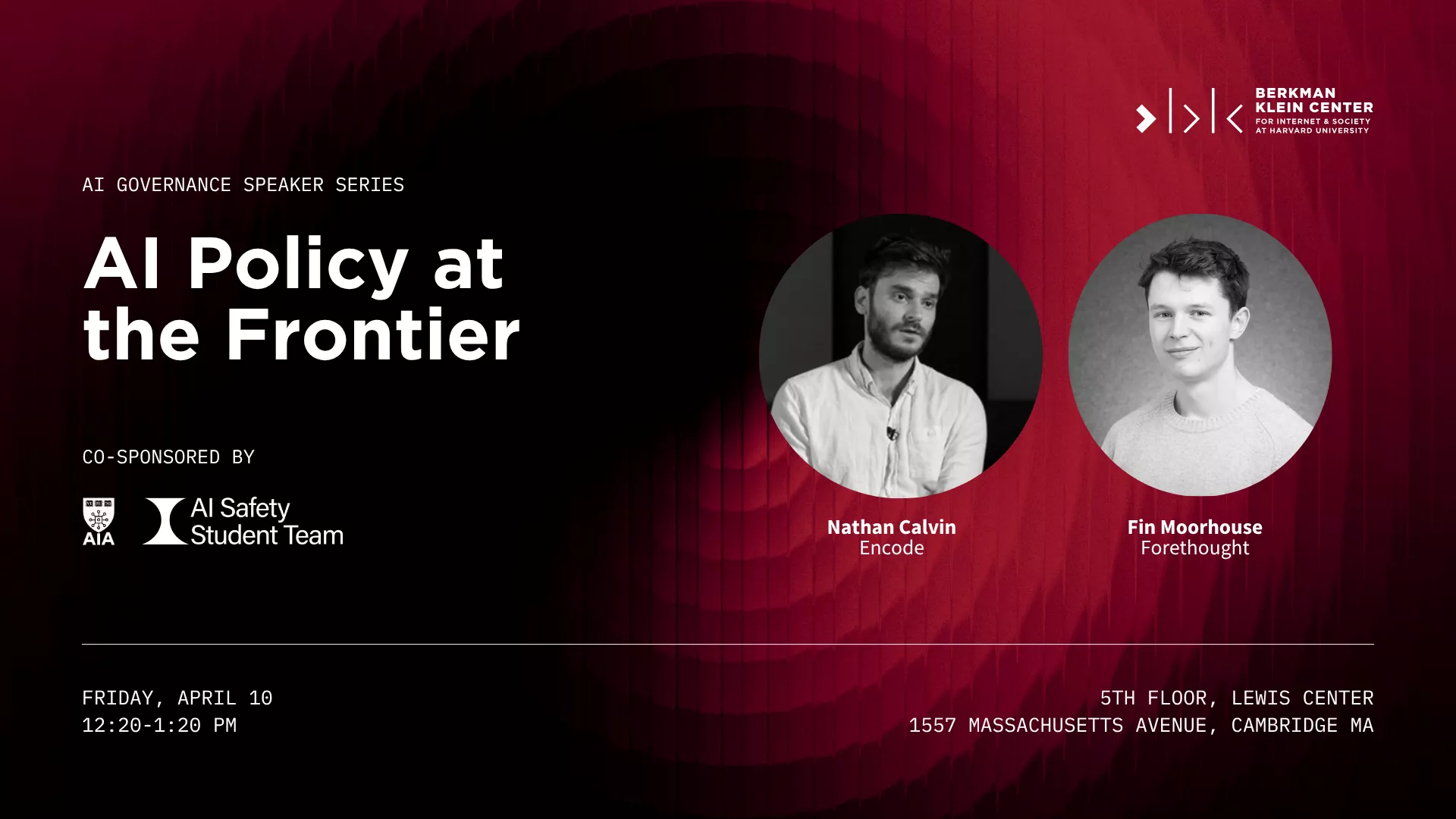
Harvard Berkman Klein Center: AI Policy at the Frontier, A Conversation with Nathan Calvin (Encode) and Fin Moorhouse (Forethought)
What does it take to govern a technology that might reshape the world within the decade? Answering that requires both big-picture thinking about where AI is heading and close engagement with the policy fights shaping it in the present. This event brings together two speakers who sit on opposite ends of that spectrum — one […]
Voters Warn Trahan: Don’t Let Big Tech Wipe Out AI Safeguards
“There is overwhelming support for stronger guardrails around the development and use of AI,” said Adam Billen, Co-Executive Director, Encode AI. “Massachusetts has been a national leader in addressing AI-related risks. Freezing those efforts now would roll back the hard-won protections Massachusetts lawmakers have established and leave the state’s children, families, and workers more vulnerable to harm from AI now and into the future. We urge Rep. Trahan to put the safety of her constituents ahead of corporate interests and oppose this preemption legislation.”